What distinguishes an emerging iGaming market in Europe today, and how do these markets differ from more mature jurisdictions in terms of player behaviour, regulation and commercial opportunity?
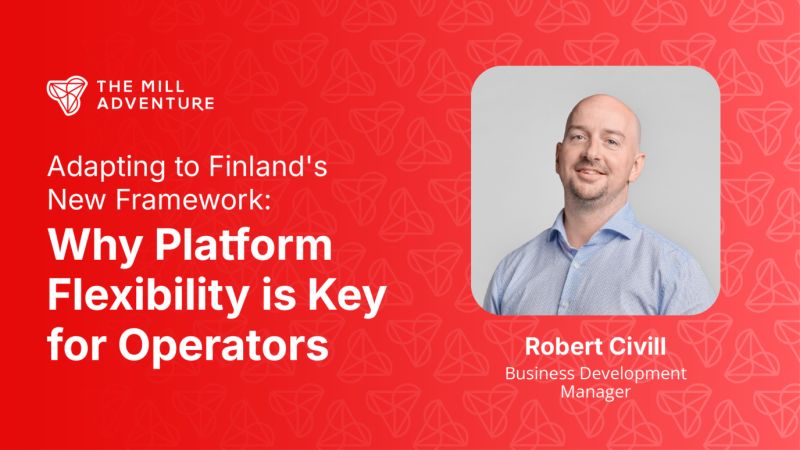
Robert Civill: The term “emerging market” can be slightly misleading in a European iGaming context. Many of the jurisdictions often grouped into this category are already mature in terms of regulatory system, player behaviour and competitive dynamics, even if they differ economically from Western Europe.
Romania, as an example, is already a well-established, regulated and competitive online market. At the same time, you have markets like Georgia, where we support a licensed operator today and where player behaviour is arguably more advanced than in parts of Western Europe, with strong engagement in loyalty mechanics, leaderboards and promotional formats that, in some cases, are restricted in larger “mature markets”.
The more useful lens is to look at where opportunity is forming, rather than whether a market fits an “emerging” label. Poland has been a topic of debate for years due to the ongoing monopoly of online casino and whether the market will eventually move towards an open licensing structure. In other cases, opportunity exists in much larger markets that are currently constrained, Germany being the obvious example. It’s hardly an “emerging” market, but despite its enormous long-term potential, factors such as turnover tax and strict regulatory limitations continue to impact channelisation and commercial viability for would-be market entrants.
So, the distinction is less about maturity, and more about timing, structure and whether the underlying economics make sense.
Individually, smaller markets may offer limited scale, but collectively they can represent significant value. How important is a multi-market approach across Central and Eastern Europe to building sustainable growth?
Robert Civill: For most operators, launching across multiple jurisdictions simultaneously is neither practical nor necessary. Individual markets can deliver meaningful value on their own, provided the organisation around the brand is lean, market knowledge is applied effectively, and compliance requirements are managed without inflating cost and headcount.
What tends to work better is a phased approach. Operators identify specific markets where there is a credible balance between regulation, competition and commercial potential, and expand selectively from there. In that context, Central and Eastern Europe remains attractive, particularly for operators looking to diversify beyond highly saturated or increasingly expensive core markets.
That is especially relevant for operators in mature jurisdictions such as the UK, where international expansion is moving up the agenda as businesses look for new growth opportunities and greater operational flexibility. That doesn’t automatically translate into a multi-market strategy across Central and Eastern Europe, but it does reinforce the importance of being able to enter and operate in new jurisdictions efficiently when the right opportunity presents itself.
From our perspective, the challenge is enabling that expansion without forcing operators to rebuild their infrastructure every time they plan to enter a new market. A significant part of our role is helping operators navigate differing compliance, reporting and integration requirements while still allowing them to retain control over key parts of their product stack.
What are the key considerations operators should make when preparing to enter new regulated markets in Europe?
Robert Civill: The main consideration is compliance, or at least it should be. Market entry is only sustainable if technical compliance and reporting are handled properly from day one. Localisation, brand development and product will naturally attract the most attention, and that’s where performance is measured, but none of it matters if the underlying technology is not reliable or fully aligned with regulatory requirements.
Each market introduces its own reporting obligations, tax logic and integration requirements, which need to function consistently in a live, 24/7 environment. That creates a practical dilemma for operators. Some choose to adapt their existing proprietary stack for each market, maintaining full control but taking on the associated complexity and ongoing overhead. Integrating with a platform that is already compliant and locally certified is a strong alternative that allows for a faster route to market and more cost-effective technical compliance maintenance.
We have developed a hybrid approach that allows operators to integrate core proprietary products, such as their sportsbook and front-end, with a market-ready platform responsible for compliance, reporting and local integrations.
For larger operators in particular, avoiding the need to adapt an existing PAM for every new market can remove an enormous amount of complexity. Market-entry projects often involve extensive planning across multiple departments, additional technical and compliance resources, specialist hires and ongoing operational overhead tied specifically to maintaining local regulatory requirements.
It allows operators to enter new regulated markets significantly faster and with far less operational strain, while maintaining continuity across the products and user experience that define the brand. At the same time, it frees up internal resources to focus on areas that actually drive growth, such as marketing, acquisition and retention.
How are smaller or emerging jurisdictions in Europe influencing your overall expansion strategy?
Robert Civill: Our business development strategy is centred around identifying and engaging operators that have a genuine interest in expansion and are actively exploring entry into new regulated markets.
In order to support that effectively, we put significant investment into technical compliance expertise and market research. The objective is to provide operators with a practical and clearly structured pathway from initial market evaluation and license application, through to certification, launch and ongoing regulated operation.
Our experience supporting a licensed operation in Georgia, together with previously holding a Romanian Class 2 license, has naturally increased our interest in the Balkans and Eastern Europe. Many of these markets continue to offer commercially attractive conditions around taxation, product offerings and player engagement practices, making them increasingly relevant in expansion discussions with operators looking beyond the largest Western European jurisdictions.
At the same time, we continue supporting operators across mature regulated markets, including Sweden, Germany, Denmark, the Netherlands and Portugal, giving expansion-focused operators access to proven market-ready infrastructure across a broad range of European jurisdictions.
Alongside this, securing and activating our Estonian license has naturally increased our focus on the wider Baltics, including Lithuania and Latvia, while Finland represents one of the clearest examples of a genuinely new regulated market opportunity where first-mover advantage may prove significant. We have already supported one of the first license applications there and have several more in progress, reflecting the level of operator interest in entering early and establishing a position from day one.
Interview originally appeared on Eastern European Gaming.