The latest draft for Finland’s 2027 launch includes some highly specific stake limits. How do they stack up against the rest of Europe, and what does this mean for operators entering this new, liberalised market?
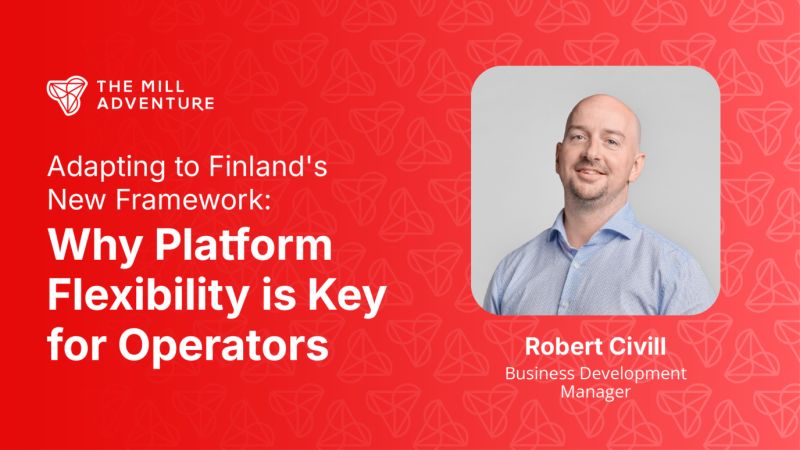
Robert Civill: The stake limits are important, and it certainly seems those in Finland will be less restrictive commercially than other markets. The draft proposes maximum slot stakes of €10 for players under 25 and €20 for those aged 25 and over, but I would not look at those figures in isolation. What stands out in Finland’s proposed framework is the level of product-level control being introduced around how games are designed and delivered.
For operators already familiar with regulated markets, the real question is not simply whether a €10 or €20 stake limit is commercially workable. It is whether the full ecosystem around the operator is ready to support the rules correctly from day one. That includes the platform, game providers and certification partners, as well as the operator’s personnel.
We saw this clearly in Germany, where stake limits, spin delays and no autoplay function required close collaboration with game providers, not just internal platform configuration. The platform can and should provide fallback protections, but the primary work is ensuring that approved game configurations and controls are in place and properly tested before launch.
That is the key takeaway for Finland. Operators preparing for July 2027 should be up to speed on all the gameplay restrictions and already have dialogue with platform partners and game providers. It’s necessary to understand the full implications for game design and what platform controls are in place to support Finnish requirements, rather than “crossing that bridge when we come to it”.
The draft is heavy on gameplay restrictions. How is that going to affect player engagement?
Robert Civill: Finland's proposals introduce several measures designed to reduce the intensity of slot gameplay, including minimum spin durations, the removal of autoplay and bonus buy features, and a ban on near-miss or misleading win signals. While these changes clearly alter the way players interact with games, I don't think they automatically mean lower player engagement. What it does mean is that operators cannot rely on game mechanics alone, and it underlines the continued shift of attention towards the overall player experience delivered by the brand.
As gameplay becomes more restricted, it places greater emphasis on platform-supported engagement mechanics. Personalised game discovery, relevant content recommendations and community-led experiences all become increasingly important in creating reasons for players to return. Effective CRM, together with loyalty programmes and promotional campaigns designed within the boundaries of the Finnish regulatory framework, can then support long-term player retention.
There is also a communication challenge. Many Finnish players will already be familiar with features that are no longer available in the regulated market. Rather than simply removing them, operators should explain why these changes exist and use them as an opportunity to reinforce the transparency, player protection and accountability that come with a regulated environment. Setting expectations clearly can help reduce frustration and reinforce trust in the regulated offering.
Ultimately, the objective is to achieve a smooth transition and build an experience that players continue to value despite the changes in gameplay experience. The operators that succeed are likely to be those that use platform capabilities to deliver a more personalised, engaging and rewarding player experience, rather than relying on a market-standard game portfolio.
What are the biggest operational considerations arising from Finland's responsible gambling framework?
Robert Civill: The latest update in Finland's player protection measures don't just change how games are played; they also introduce more frequent player interactions. One example is the mandatory Reality Check every 15 minutes, requiring players to actively acknowledge the message before play continues. While Reality Checks themselves are well established in many regulated markets, the increased frequency adds another layer of friction to the player journey.
For operators, the challenge is not simply implementing another responsible gambling feature. It’s ensuring these interactions are delivered consistently, recorded correctly and managed efficiently alongside other market-specific requirements, while minimising the impact on the player journey.
It's another example of how every regulated market introduces its own operational nuances. A 15-minute reminder in Finland, different intervals elsewhere, varying messaging requirements and jurisdiction-specific responsible gambling workflows all add complexity that must be configured, maintained and evidenced over time.
Operators should be looking for technology that allows market-specific responsible gambling rules to be configured rather than developed. Whether that's adjusting Reality Check intervals, configuring player interaction workflows, or automating escalation and review processes, these controls should already exist within the platform rather than requiring bespoke development for each new jurisdiction. The less bespoke work required every time a new market is entered or regulation evolves, the easier it becomes to scale across multiple jurisdictions while maintaining compliance.
We hear a lot about loss limits in places like Germany and the Netherlands. How is Finland doing things differently?
Robert Civill: Germany and the Netherlands are often discussed through the lens of financial controls, particularly universal and aged-based deposit limits. Finland appears to be taking a slightly different route. The most recent framework communicated is not so much concerned with how much a player can deposit or lose, but more about how gambling products behave during play.
That distinction matters. Finland is proposing controls around maximum stakes, game speed, autoplay, simultaneous slot play, time reminders and even how game outcomes are visually presented to the player. In other words, player protection is being built into the product experience itself, not only into the account or wallet layer.
For operators, that changes the preparation work. It’s not enough to configure financial limits in the PAM and assume the job is done. They need to assess whether their platform, game providers and certification process can support Finland-specific product rules consistently across the full content portfolio.
That is where platform readiness becomes non-negotiable. Operators entering Finland should be looking at rule configuration, provider coordination, fallback protections, auditability and reporting as one connected project. The risk is not that one individual control does not function correctly; it is that several layers need to work together correctly from day one.
Ultimately, what is your advice for operators looking to enter Finland in July 2027?
Robert Civill: Finland represents different opportunities for different operators. For some, it will be the natural progression from serving Finnish players under an offshore license. For others, particularly established international groups, it represents an attractive opportunity to enter one of Europe's newest regulated markets.
Regardless of where an operator starts, the advice is largely the same: treat Finland as a market-entry project rather than a license application. Success depends on far more than obtaining regulatory approval. Platform readiness, supplier coordination, data vault reporting system, responsible gambling processes and operational planning all need to come together well before launch.
The operators that begin this work early will be in the strongest position to launch in July 2027. Those that leave technical compliance and operational readiness until the certification stage are likely to face unnecessary delays and complexity.
At The Mill Adventure, we've taken exactly this approach with our own preparations for Finland. Whether supporting an operator transitioning from an offshore model or helping an established international group enter a new regulated market, our focus is the same: providing end-to-end support across licensing, technical compliance, platform configuration, certification and market launch. Ultimately, our goal is to help partners reduce complexity, accelerate time-to-market and enter Finland with confidence.
Interview originally appeared on The Bet Press.
Speak to our team to find out how The Mill Adventure can support your entry into Finland.