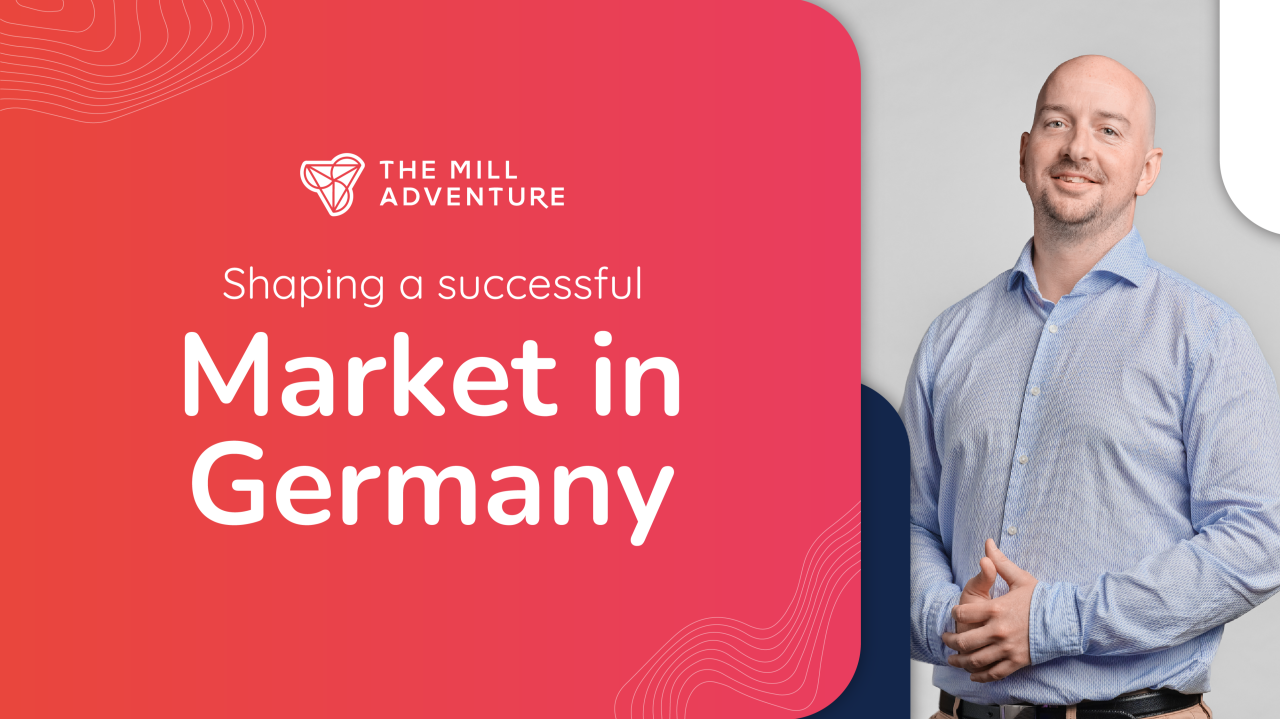
Germany is a regulated market full of challenges for operators, but also one that contains considerable potential should regulations adapt to stark realities. With the Gaming in Germany conference in full flow, Robert Civill, Business Development Manager at The Mill Adventure, discusses the key challenges for a technical partner in Germany, and the hot topics on the event agenda.
Flexibility is your friend
Our experience in Germany has taught us that true readiness for regulated markets isn't about ticking compliance boxes. It's about engineering adaptability into every layer of your platform.
Germany's framework, which originates from the Interstate Treaty on Gambling 2021, is technically demanding. Integrating with national systems like LUGAS, the Interstate Gambling Evaluation System, managing cross-operator deposit limits, and handling strict data-reporting protocols put our compliance framework through its paces, but ultimately demonstrates how a compliance first approach is the foundation of success in regulated markets.
These requirements have similarities across other regulated markets, but no two markets are the same. Furthermore, regulations inevitably evolve over time, so the approach of a technical partner cannot be short-sighted. We are able to support our clients in conforming with changing requirements in regulated markets, because we have built flexibility and adaptability into the product architecture from day one.
Engagement with the regulator
One issue that is highlighted by Germany's market up to this point is the lack of willingness from regulators to engage in ongoing dialogue with platform providers. This feels counter-intuitive because in some cases the platform provider is a critical supplier of the player account management system, acting as data processor, facilitating KYC and integrating with national systems, ensuring operator compliance with the regulations.
Before the market was open in Germany, the regulator invited applicants to provide feedback and raise questions on various items of technical documentation. This was at least something, and it resulted in further iterations and improvements in the documentation - everybody wins.
Unfortunately, this constructive dialogue didn't continue, which is one of the greatest frustrations of a technical provider serving regulated markets. The common position of regulators across Europe is that only licensees (the B2C operators) are permitted to communicate with them directly. Inevitably, when the regulator decides to introduce new measures or restrictions, technical providers are forced to adapt, rather than being invited to an open forum where they can contribute with meaningful feedback on the "what?" and "how?" related to technical compliance.
From regulation to innovation
For better or worse, the tough conditions in Germany have required some innovative solutions and an evolution of the player experience.
In particular, the creative ways that some game studios addressed the need for RTPs below industry average. We saw the introduction of mechanics and features that preserved attractive gameplay, somewhat masking the effect of the dramatically reduced RTP that operators were compelled to apply to offset a 5.3% turnover tax.
The framework has also reshaped how platforms communicate with central databases, and the use cases for these central databases. Germany's cross-operator deposit limit is a first-of-its-kind in the industry, and my feeling is that it's difficult to argue against if we truly want to master player protection.
Rather than treating such requirements as friction points, operators need to incorporate them into intuitive, mobile-first onboarding flows that build trust and transparency from the start. Again, as a technical stakeholder you need to be open to continuous development and improving the inefficient.
The importance of unity
Looking ahead, the reality is that meaningful regulatory change in Germany will take time. While the ongoing review of the Interstate Treaty is a welcome opportunity for reflection, the kind of major change that everyone wants, such as a move away from the turnover-based tax, requires significant rewriting of the law. This is not something that we can expect to happen in the short or medium term.
That said, pressure is building on the regulator. The growing size of the black market, largely fueled by its ability to offer higher RTPs and fewer restrictions, is a clear signal that the current framework needs to evolve if channelisation is to improve. It is great to see collaboration among licensed operators and associations to highlight unlicensed activity and push for fairer conditions. That collective voice cannot be ignored.
At The Mill Adventure, we are proud to have been among the first movers in Germany when the market opened in 2021. Four years on, the long-term potential of the market is still intact and we look forward to seeing some positive change in the regulation in due course. We remain committed to supporting our existing clients, ensuring they not only meet regulatory expectations but thrive within them.
Perfect timing
The Gaming in Germany conference comes at an interesting time, with the 2021 Interstate Treaty currently under review. The hope is that this will open the door to adjust some of the more accessible parts of the regulation that put licensed operators at such a disadvantage up against the black market operators.
The ongoing rise and prominence of the black market will be a thread that runs throughout the conference agenda. There has been a lot of eye-opening research conducted and shared within the local operator community recently, and Gaming in Germany offers the perfect setting to push the conversation forward. Hopefully, this can help influence favorable change in the regulation of one of Europe's most important markets.
The Mill Adventure has been providing our platform solution in Germany since regulation came into force in 2021. Despite its many challenges and complexities, we remain committed to the market, so we are delighted to support an event that brings together all the key stakeholders, including trade associations and representation from the regulator (GGL).