The Netherlands presents a unique challenge for iGaming operators. Dutch players have been gambling online for years, but the Kansspelautoriteit (KSA) only opened its regulated licensing framework in 2021, and its standards are among the strictest on the continent. Operators who underestimate the technical and regulatory lift don't just face delays. They risk losing their launch window entirely.
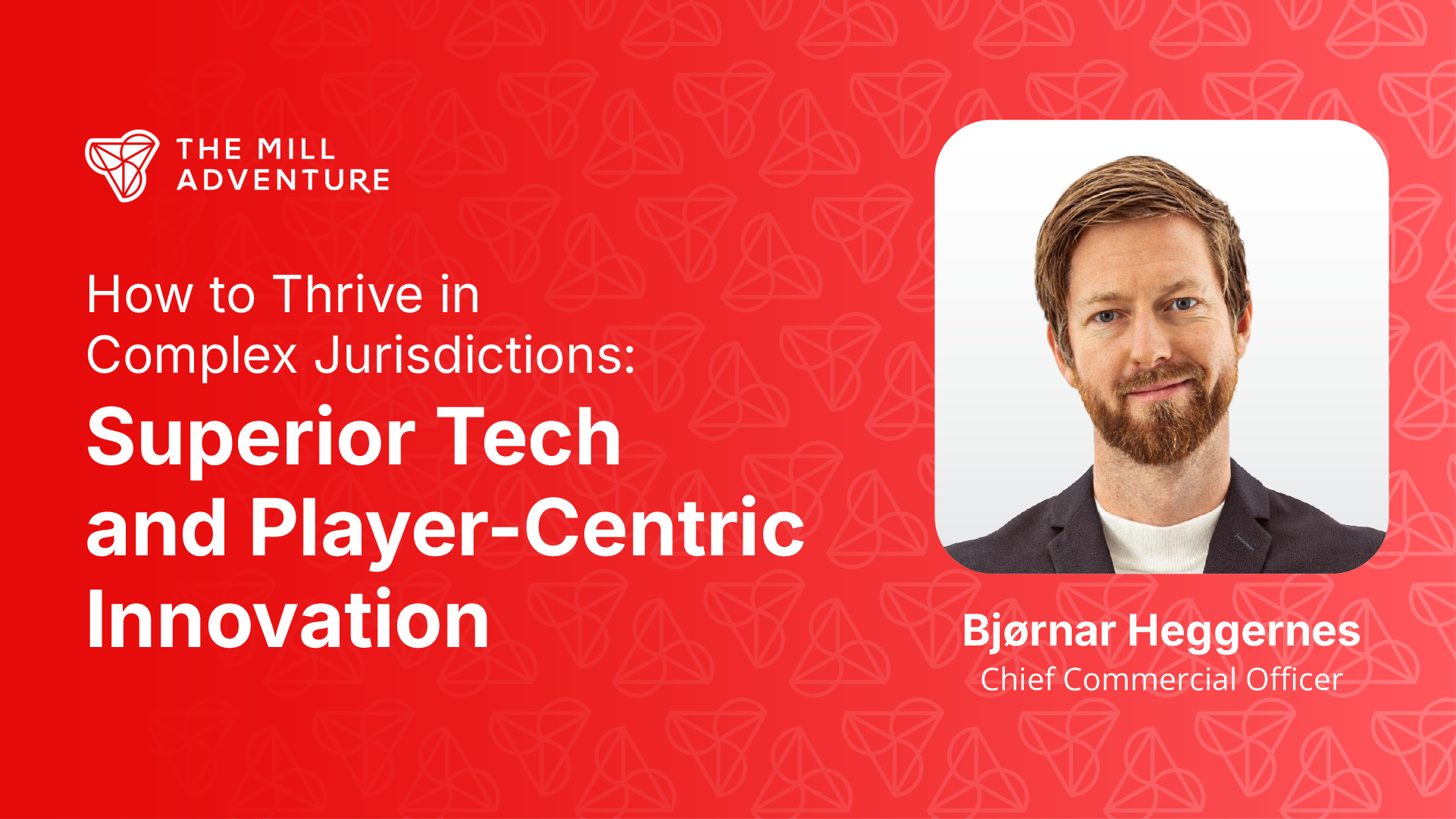
The recent launch of Winz.nl, powered by The Mill Adventure (TMA), is a clear example of how to get it right. We spoke to Bjørnar Heggernes, Chief Commercial Officer at The Mill Adventure, about what that required, and what operators entering comparable markets need to get in place before they can compete.
Get Compliance Right Early or Pay for It Later
For operators entering the Netherlands, the single biggest commercial risk is underestimating the compliance infrastructure required before launch. Get it wrong and you face delayed approval, regulatory penalties, and a launch that costs far more than it should.
The KSA sets a high bar. As Heggernes explains:
The Dutch market is one of the most rigorous and demanding in the world. For a new brand, the technical overhead of meeting KSA standards, ranging from CRUKS integration to complex reporting, can be very difficult to overcome.
CRUKS is the Dutch central exclusion register. Real-time player checks at onboarding are mandatory, operators who cannot demonstrate this functionality will not receive approval to operate. The same applies to vault reporting, automated responsible gambling interventions, and CCBR integrations. These are not optional layers. They are prerequisites.
For operators, this means one thing above all: compliance infrastructure needs to be solved before commercial planning begins, not alongside it. The Mill Adventure addresses this by building regulatory logic directly into the platform core, configurable per jurisdiction, fully automated, and ready to satisfy KSA requirements from day one. For Winz.nl, the result was a clean path from licence acquisition to full commercial launch, with the technical and compliance overhead handled at platform level. The brand team could focus on acquisition and product from the outset, not on solving integration problems post-launch.
The commercial benefit: faster launch approval, reduced onboarding risk, and the ability to start generating revenue earlier.
Beat the Black Market by Being the Better Choice and Not Just the Legal One
Regulated operators in the Netherlands are not only competing with each other. They are competing with a large and persistent black market. The KSA has been vocal about the channelisation gap, and the pressure on licensed operators to demonstrate a genuinely superior product, not just a compliant one, is increasing.
Aggressive bonus mechanics are not the answer. They create short-term acquisition spikes without building loyalty, and the KSA scrutinises promotional practices closely. Operators who lean on bonusing to compete with unlicensed alternatives tend to find themselves with a compliance problem on top of a retention problem.
The more effective approach is to make the regulated experience so clearly better that the unlicensed alternative becomes irrelevant. As Heggernes puts it:
To improve channelisation efforts, the regulated offer must be the superior choice, and not just the compliant one.
The Mill Adventure achieves this through two mechanisms. The first is AI-driven SmartLobbies, which serve each player content based on their individual behaviour in real time, increasing conversion, improving session quality and making every visit feel relevant rather than generic. The second is a loyalty framework built around player control rather than operator-driven incentives:
Our loyalty framework replaces traditional, operator-driven bonus mechanics with a player-initiated model where players earn points and choose their own rewards from a catalogue. It's transparent, it aligns with responsible gambling principles, and it builds genuine trust. When a player feels in control and is presented with a comprehensive experience that is tailored to them, the unregulated alternative loses its appeal.
For operators, this translates directly: higher retention rates, stronger LTV, and a product that holds up under regulatory scrutiny because responsible gambling is built into the mechanics, not applied as an afterthought.
Agility Over Scale: Why Your Platform Partner Determines Your Speed to Market
In a market where regulatory requirements shift and player preferences evolve quickly, the wrong platform partner doesn't just slow you down, it puts your entire market position at risk. The ability to adapt fast is not a technical preference. It is a commercial necessity.
Heggernes is direct about what this requires:
In today's B2B landscape, a platform provider must be a strategic growth partner.
Large operators often find themselves constrained by infrastructure built across years of growth, systems too layered to adapt quickly when a technical requirement changes. For operators entering the Dutch market today, that rigidity is a liability they cannot afford to inherit. A modular platform, one that can be reconfigured at jurisdiction level without rebuilding from the ground up, removes that risk entirely.
The practical upside is significant:
When a platform is modular, the operator can adapt to a sudden regulatory change or a shift in player appetite in days, not months. That speed-to-market is a crucial way to carve out share in a highly competitive regulated market.
For operators, this means faster launch timelines, lower exposure to regulatory change, and the ability to respond to market shifts without costly technical rebuilds. The Mill Adventure's partnership with Orange Gaming, the group behind Winz.nl, works precisely because the platform delivers this flexibility without compromising on compliance control. Agile operator, agile platform. That combination is what allows a newer brand to compete against incumbents with far greater resources.
What AI and Real-Time BI Actually Do for Your Bottom Line
AI in iGaming is frequently discussed in vague terms. The operational and financial case is more straightforward: automation reduces headcount costs, speeds up decision-making, and directly improves the metrics that determine whether a Dutch market operation is profitable.
Heggernes frames it clearly:
Many established brands have massive internal teams manually managing lobbies and CRM campaigns, whereas our platform automates these manual processes.
For a new brand entering the Netherlands without the overhead of a large internal team, this is not an optional efficiency, it is what makes the economics work. Manual lobby management is slow and expensive. AI-driven SmartLobbies replaces it with real-time content personalisation that improves conversion and increases session value without adding operational cost.
The business intelligence layer compounds this advantage:
By using real-time BI and AI, a brand can identify and serve niche segments very effectively. Our SmartLobbies solution ensures the gaming content is relevant to the individual, which increases retention and Lifetime Value (LTV).
In the Dutch market, where the 29.5% GGR tax compresses margins, maximising LTV from every acquired player is not a growth objective, it is a survival requirement. Operators who cannot retain players effectively will find the unit economics increasingly difficult to sustain regardless of how well they acquire.
In the Dutch market, where margins are tight and competition is fierce, that level of automation can make all the difference in terms of sustained profitability.
The commercial upside is concrete: lower operational cost, higher retention, better LTV, and a platform that enables smarter decisions faster, without scaling internal headcount proportionally.
The Dutch Blueprint and Where It Applies Next
The Winz.nl launch is not only a Dutch story. It is a repeatable framework for entering any high-compliance European market: get the regulatory infrastructure right first, build a product experience that makes the regulated offer genuinely superior, and work with a platform partner agile enough to move with you as conditions change.
Those same requirements apply directly to Finland, where the regulated market is opening now and first-mover positioning is still available. They apply in Romania and Bulgaria, where rising operator expectations are raising the bar on technology. And they will apply in Poland, where a potential shift away from the state monopoly model would create one of the most significant new licensed opportunities in European iGaming.
In each case, the operators who move earliest and with the right infrastructure in place will be the hardest to displace. The Netherlands is the proof of concept. The question is where you apply it next.
Interested in how The Mill Adventure's platform can support your regulated market entry strategy? Contact us to find out more.
Quotes from Bjørnar Heggernes originally appeared in an interview with EE Gaming.